
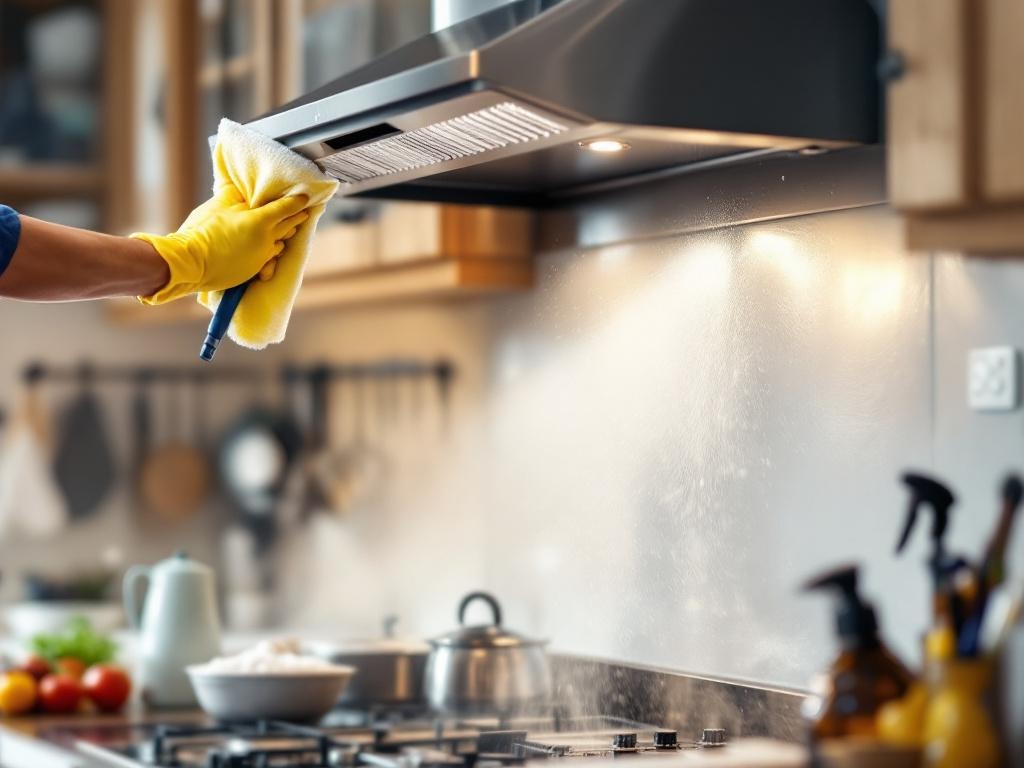
Proper maintenance of your kitchen equipment is crucial for safety and efficiency. One such task that often goes overlooked is hood cleaning. In this guide, we will walk you through the process of cleaning your kitchen hood yourself. This can help improve the air quality in your kitchen and also decrease the risk of fire.
Why is Hood Cleaning Important?
Cooking produces grease, smoke, and heat, which are all drawn up into the hood. Over time, this can lead to a build-up of grease and grime that can be harmful if not cleaned regularly. It can also affect the performance of your kitchen hood, reducing its efficiency, and increasing the risk of fire.
What You Will Need
- Cleaning Solution: A degreaser or a mixture of vinegar and baking soda can be used as a cleaning solution.
- Scrubbing Brush: A scrubbing brush will come in handy to remove stubborn grease and grime.
- Cloths/Rags: You will need plenty of clean cloths or rags to wipe down the hood.
- Bucket: A bucket to mix your cleaning solution and to rinse your rags.
Estimated Time and Costs
The entire process of cleaning your kitchen hood should take about an hour. As for the cost, since you are doing it yourself, it should only cost you the price of the cleaning materials which should be around $10-$20.
Steps to Clean Your Kitchen Hood
Step 1: Preparation
Before you begin cleaning, ensure that the hood and the stove beneath it are switched off and cool to the touch. You should also cover the stove and the area around it with a drop cloth or old newspapers to protect it from the cleaning solution.
Step 2: Remove the Filters
The filters capture grease and grime and can be removed easily for cleaning. Simply slide them out or unclip them.
Step 3: Soak the Filters
Soak the filters in a bucket of cleaning solution. This will help loosen the grease and grime, making it easier to scrub off.
Step 4: Clean the Hood
While the filters are soaking, you can start cleaning the hood. Apply the cleaning solution and scrub well. Wipe down with a clean cloth when done.
Step 5: Scrub the Filters
After the filters have soaked for a while, scrub them clean, rinse and let them dry before reinserting them into the hood.
Safety Tips
- Always wear gloves and protective eyewear when handling cleaning solutions.
- Ensure the area is well-ventilated when cleaning.
- Never mix cleaning chemicals unless you are certain it is safe to do so.
Conclusion
Cleaning your kitchen hood is an important task that can improve the efficiency of your hood and the air quality in your kitchen. While it may seem like a daunting task, it is actually quite simple and can be done with a few common household items.
External Resources
For more information on hood cleaning and maintenance, check out these resources: